Straight rails
Fits: Showers, hallways, alongside steps
300mm to 900mm lengths in 32mm-diameter stainless steel, mounted horizontally, vertically or on an angle depending on how you move through the space.
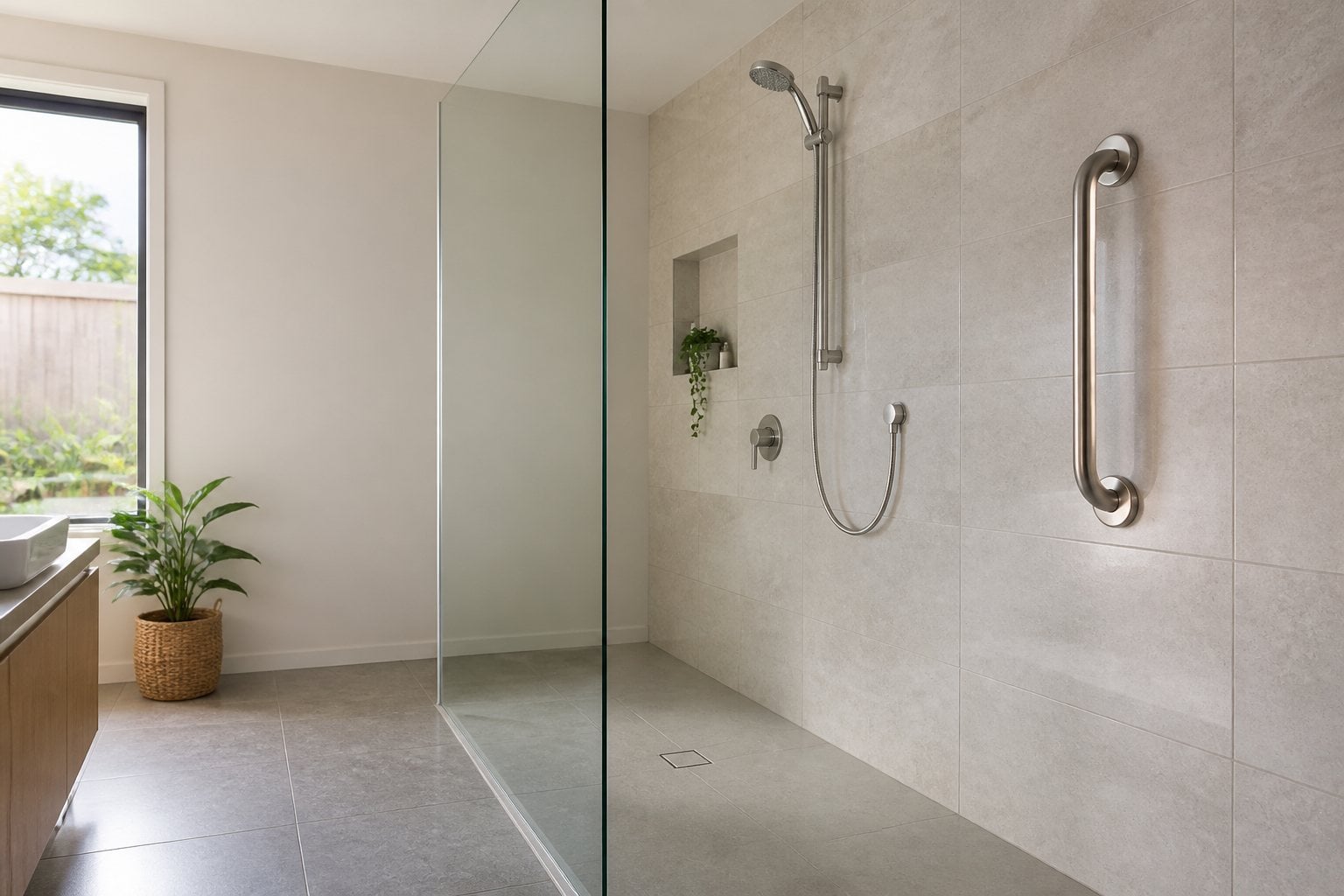
Stainless steel grab rails, angled rails and shower seats, installed exactly where you need them and fixed into solid wall framing so they hold real weight, not just look the part.
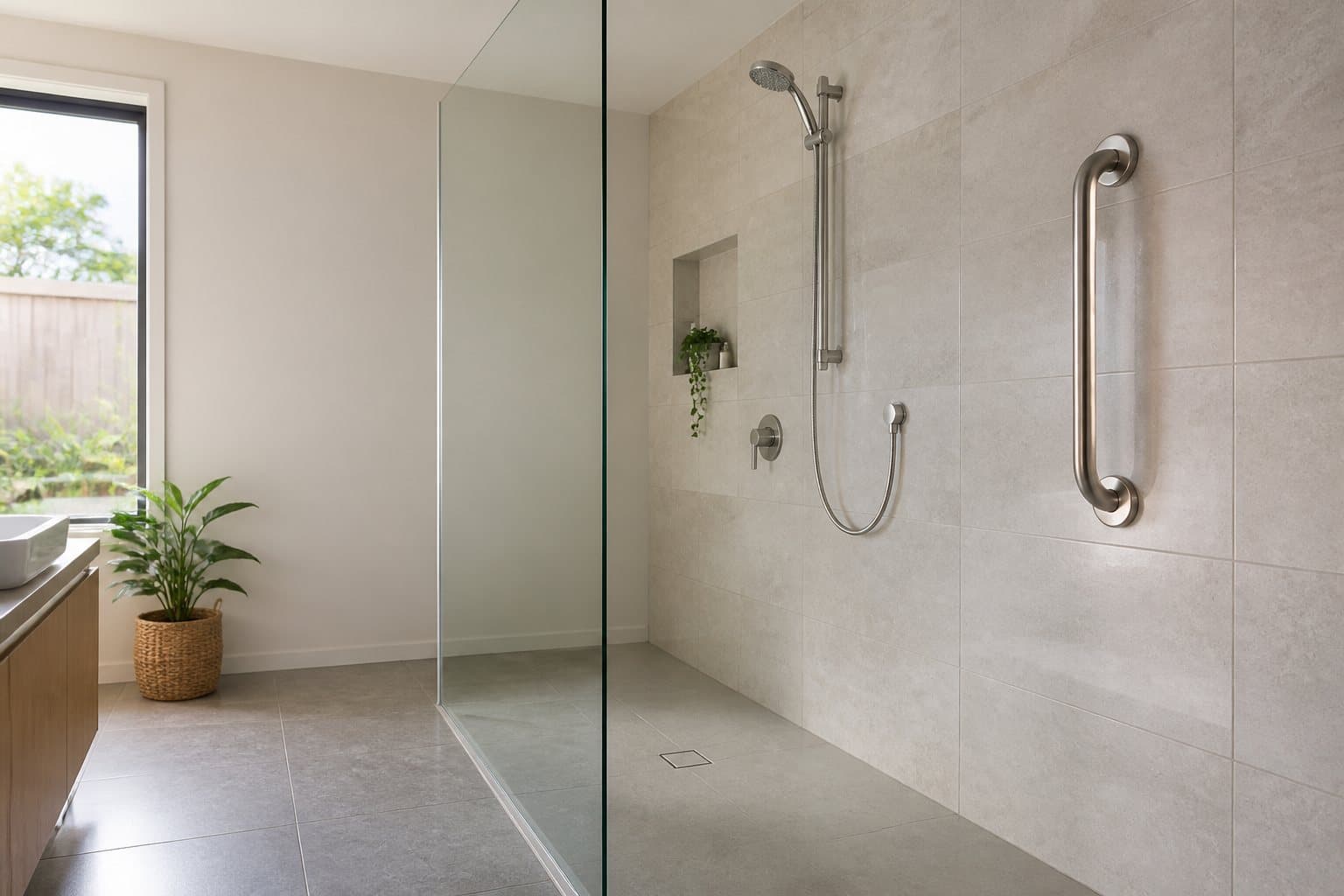
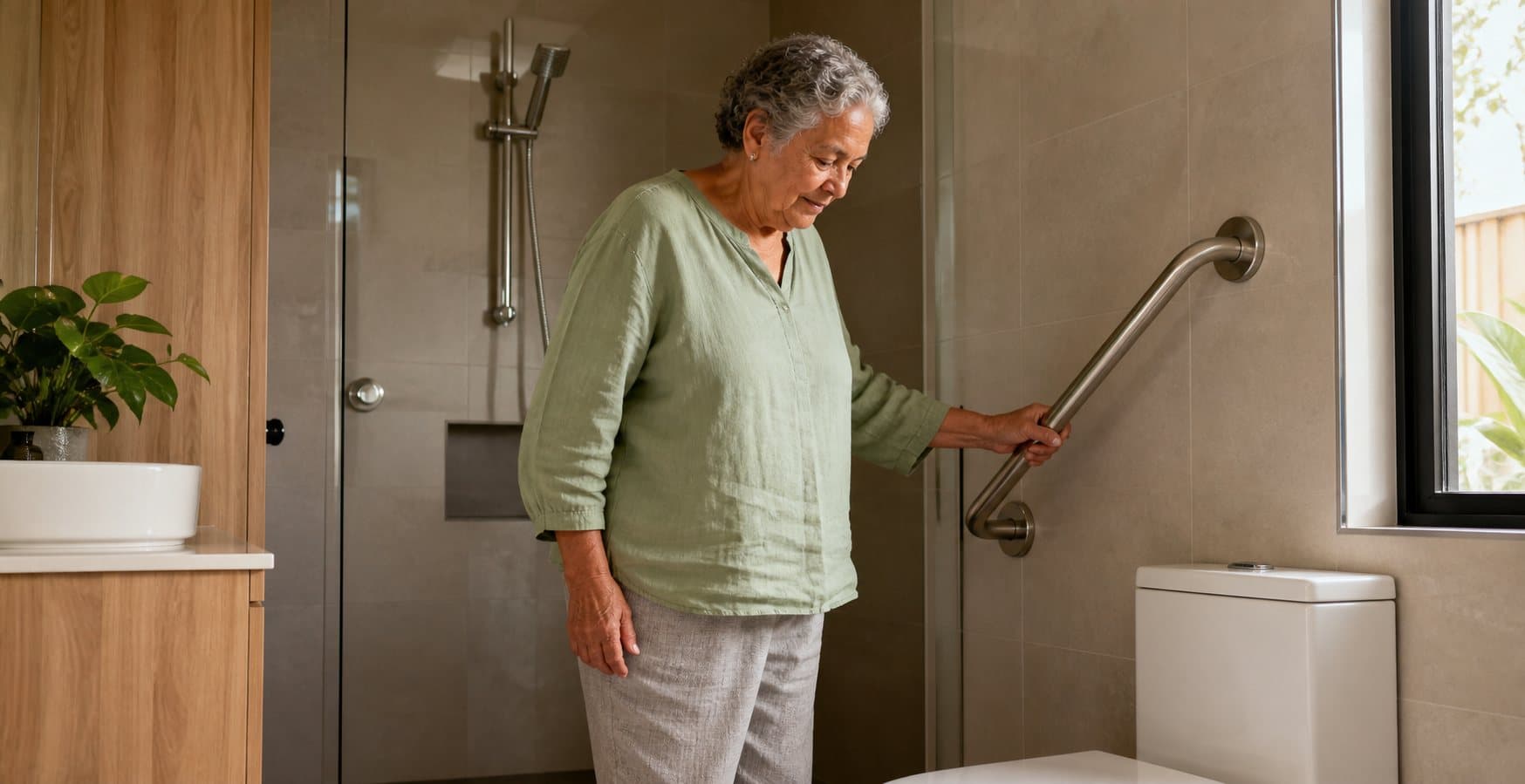
A grab rail is one of the simplest, most effective home modifications available — and often the first thing an OT recommends. These are the situations it solves outright.
Bathrooms and toilets are where most falls happen. A rail placed exactly where you reach for it turns a wet floor from a hazard into a non-event.
Hip and knee replacements, stroke recovery and general deconditioning all benefit from temporary or permanent support at the toilet, shower and bed.
MS, Parkinson's and muscular dystrophy change grip strength and balance over time. Grab rails are usually the first and simplest home modification, and the easiest to add to as needs change.
A rail positioned correctly turns a shower or toilet transfer into something you can do without a second person standing by.
Every rail is placed after watching how you actually move through the space, not fixed at a generic height taken off a plan.
Rails are screwed into wall studs, noggins or a purpose-fitted backing plate — never just into plasterboard or tile adhesive.
Rails and fixings are specified to the relevant Australian accessibility installation standard for the load a grab rail needs to carry.
Tiled walls are drilled, sealed and fixed with waterproof-rated fasteners so the existing waterproofing membrane isn't compromised.
Stainless steel or white nylon finishes to suit your existing bathroom fitout, not just whatever happens to be in stock.
Bathroom, toilet, hallway and bedroom rails quoted and installed together, rather than as separate call-outs.
We supply stainless steel and nylon rails in a full range of lengths and angles, plus shower seats and backrests where standing isn't an option.
Fits: Showers, hallways, alongside steps
300mm to 900mm lengths in 32mm-diameter stainless steel, mounted horizontally, vertically or on an angle depending on how you move through the space.
Fits: Corner showers and combined seat-to-stand support
90-degree and 45-degree configurations that support both a downward push to stand and a sideways grip for balance, in a single fitting.
Fits: Toilets, where most transfers happen
A 40-degree angled rail or a rail set either side of the pan, sized for a stand-to-sit transfer rather than a straight-line grab.
Fits: Anyone who can't stand for a full shower
Folding shower seats and adjustable-depth backrests, fitted alongside your rails so a shower is achievable from start to finish.
An assessment usually covers more than the bathroom. These are the areas we look at, and what we typically fit in each.
| Room | Common risk | Typical fit |
|---|---|---|
| Bathroom & shower | Wet, slippery tiles with nothing to hold on the way down | Vertical rail at the shower entry, horizontal rail along the back wall |
| Toilet | Sit-to-stand transfer with nothing beside the pan | Ambulant rail set either side, or a single angled rail against the wall |
| Hallways & stairwells | Long unsupported walks, especially at night | Continuous handrail fixed at a consistent height along the run |
| Entry steps & ramps | The first and last step of the day, often rushed | Vertical grab rail beside the top and bottom step |
| Bedroom | Getting in and out of bed unassisted | Floor-mounted or bed-fixed assist rail beside the mattress |
A grab rail is only as strong as what it's screwed into. These are the questions we work through at the assessment.
A grab rail takes sudden, full body-weight loading, not a gentle lean. Where there's no stud or noggin in the right spot, we fit a purpose-made backing plate rather than relying on the plasterboard itself.
Every rail and fixing we install is specified against the Australian accessibility installation standard for the load a grab rail needs to carry — not just whatever's cheapest online.
We confirm landlord or strata consent, and discuss make-good conditions, before anything gets drilled.
Drilling through tile without sealing risks water getting behind the membrane. Every penetration we make is sealed as part of the installation.
White nylon can disappear against a white bathroom, which is sometimes exactly the point and sometimes the opposite of what's needed. Stainless steel stands out for anyone with low vision.
Slip-resistant flooring, lever taps and a raised toilet seat often come up in the same assessment. See our Capital Supports vs Assistive Technology guide for how these fit together in a plan.
Because rails are fixed to the structure of the home, they usually sit under Home Modifications rather than Assistive Technology.
Talk with your support coordinator, LAC or occupational therapist about where falls or transfer difficulty are happening.
Your OT completes a Home Modifications assessment identifying which rails address the functional need.
Innogreen provides a written quote and product specification for the assessment or report.
The request goes into your plan review or a minor home modification request; the NDIA makes the decision.
On approval we install, load-test every rail on site, and hand over completion documentation for your file.
Funding is never guaranteed. Whether the NDIS funds grab rail installation depends on your individual plan and goals — always confirm with your planner, LAC or support coordinator. See our guide to Capital Supports and Assistive Technology for a plain-language walkthrough.
Deeper reading on funding, assessments and how home modifications fit into your plan.
Grab rails are commonly funded under NDIS Home Modifications when they address a functional need and are backed by evidence from your OT or support coordinator. Because they involve fixing to the structure of the home, they're usually treated as a minor home modification rather than Assistive Technology. Approval always depends on your individual plan, goals and reasonable-and-necessary assessment, so please confirm with your planner, LAC or support coordinator.
Every penetration we make is sealed to keep the waterproofing membrane intact, and we fix into structural framing or a backing plate rather than tile adhesive alone. For rentals and strata properties, we confirm consent and make-good expectations with the owner or body corporate before any drilling starts.
Yes, with the landlord's consent. We can provide documentation for the request and discuss make-good options at the end of a tenancy as part of the quote.
Every rail and fixing we install is specified to the relevant Australian accessibility installation standard for the load a grab rail needs to carry, and we load-test each one on site before finishing the job. The rating depends on the rail, the wall type and the fixing method used, which is why the assessment matters as much as the hardware.
Most homes are completed within half a day. Larger jobs covering the bathroom, toilet, hallway and bedroom in one visit typically take a full day.
For most people, grab rails are the first and lowest-cost step, and they can be installed without any renovation work. A full accessible bathroom renovation is a separate, larger project that can be planned for later if your needs change — the two aren't mutually exclusive.
Yes. This comes up often for progressive conditions, where grip strength or reach changes over time. We can reposition existing rails or add new ones as part of a plan review.
A grab rail is a fixed point of support, typically at a toilet, shower or bed, sized for a specific transfer. A handrail runs continuously along a walked path, such as a hallway or set of steps, providing support the whole way. We install and quote both together where a home needs them.
Book a free rail assessment. We'll check your wall framing, match rails to how you move, and prepare the documentation your OT and support coordinator need.